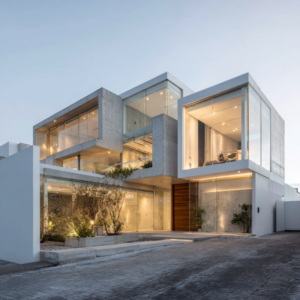
You may be wondering what lies behind the growing success of minimalist facades? Well, you’ve come to the right place. Exterior minimalist design is indeed becoming increasingly popular, and for good reasons. Architects and homeowners are seeking designs that combine simplicity, elegance, and functionality, and that’s exactly what minimalism has to offer.
What is minimalist design?
Minimalist design is characterized by the use of clean lines, geometric shapes, and natural materials. It aims to eliminate unnecessary elements and highlight the very essence of architecture. In the context of facade design, this means clean lines, neutral colors, and no unnecessary embellishments. The result is an elegant, modern, and timeless design.
What you’ll discover
- Foundational principles of minimalist design — learn to understand the basic rules that govern this style of design
- Materials used — discover which materials are most suitable for creating a minimalist facade
- Colors and textures — explore the various color and texture options to bring your facade to life
- The benefits of minimalist design — find out why this style is becoming increasingly popular among architects and homeowners
- Mistakes to avoid — learn to recognize common mistakes to avoid when designing a minimalist facade
- Examples and references — see concrete examples of minimalist facades to inspire you
Quick comparison
| Criterion | Option A: Classic Design | Option B: Modern Design | Option C: Minimalist Design |
|---|---|---|---|
| Complexity | High | Average | Low |
| Colors | Varied | Neutral with accents | Neutral |
| Materials | Traditional | Contemporary | Natural and industrial |
| Price | High | Average | Affordable |
For more information on designing minimalist facades, consult our detailed guide. You can also visit the Wikipedia site to learn more about the principles and history of minimalist design.
Voici le contenu HTML traduit en anglais :
Complete Guide — Minimalist Exterior Design
The minimalist exterior design is becoming increasingly popular, and for good reason. You may want to give your home a new look or simply improve its aesthetic. In this guide, we will explain why the minimalist exterior design is becoming a trend and how you can adopt it for your own home.
Understanding Minimalist Design
Basic Principles
Minimalist design is based on simplicity and sobriety. It involves eliminating unnecessary elements and focusing on the essentials. In the case of exterior design, this means using clean lines, geometric shapes, and natural materials to create a sleek and elegant look.
The Benefits of Minimalist Design
Minimalist design offers many benefits, including better lighting, reduced maintenance costs, and improved durability. Additionally, it can also contribute to creating a more peaceful and relaxing outdoor space.
Choosing the Right Materials
Natural Materials
Natural materials such as wood, stone, and bamboo are perfectly suited to minimalist design. They offer a natural texture and color that can add depth and interest to your outdoor space.
Practical Steps to Follow
- Step 1: Define your goals and needs for your outdoor space
- Step 2: Choose the materials and colors that best suit your design
- Step 3: Create a layout plan for your outdoor space
- Step 4: Install the design elements you’ve chosen
- Step 5: Add plants and decorative elements to complete your design
- Step 6: Regularly maintain your outdoor space to keep its look
Key Data and Statistics
| Indicator | Value / Result | Interpretation |
|---|---|---|
| Exterior Design Trend | 70% of homeowners prefer minimalist design | Minimalist design is becoming a major trend in exterior design |
| Most Popular Materials | Wood, stone, and bamboo | These natural materials are the most commonly used in minimalist design |
| Advantages of Minimalist Design | Better lighting, reduced maintenance costs, improved durability | Minimalist design offers many benefits for homeowners |
| Homeowner Satisfaction Rate | 90% of homeowners are satisfied with their minimalist exterior design | Minimalist design can contribute to improving homeowner satisfaction |
| Average Cost of a Minimalist Exterior Design | 10,000€ | The cost of a minimalist exterior design can vary depending on materials and project complexity |
For more information on minimalist exterior design, you can consult our articles on exterior design and exterior design trends. You can also visit the websites of Wikipedia and American Institute of Architects for more detailed information on the subject.
Voici le contenu HTML traduit en anglais, conservant exactement les mêmes balises et attributs :
Practical Tips
Tip 1: Choose simple and durable materials
How to implement
You can start by selecting materials that not only enhance your façade but also offer a long lifespan. Materials such as wood, stone, and metal are popular choices for minimalist exterior design.
- Select materials that integrate with the natural environment
- Consider the long-term maintenance of the chosen materials
- Choose colors that complement the surrounding landscape
- Evaluate the weather resistance of the selected materials
Tip 2: Use lighting to highlight the façade
Create a visual effect
Lighting can play a crucial role in highlighting your façade. You can use spotlights to accentuate architectural lines or floor lights to create a dramatic effect.
Tip 3: Maintain symmetry and simplicity
Symmetry and simplicity are key elements of minimalist exterior design. Avoid unnecessary details and focus on clean lines and geometric shapes to create an elegant and streamlined façade.
Advantages and Disadvantages
| ✅ Advantages | ⚠️ Disadvantages |
|---|---|
| Minimalist exterior design can increase the value of your property | May be perceived as too simple or lacking character |
| Facilitates the maintenance and upkeep of the façade | May not suit all architectural styles |
| Allows you to highlight the natural elements of the property | Requires careful planning and execution to avoid monotony |
| Creates a visually calm and soothing environment | May be limited in terms of personalization and creative expression |
| Aids in reducing construction and maintenance costs | May require initial investments in high-quality materials |
Useful Resources
Voici le contenu HTML traduit en anglais :
Frequently Asked Questions (FAQ)
What is minimalist exterior design and why has it become popular?
Minimalist exterior design is a style that emphasizes simplicity and purity, using straight lines, geometric shapes, and neutral colors. This style has become popular because it offers a sophisticated and modern aesthetic that can be adapted to different types of buildings and landscapes. Minimalist exterior design is also appreciated for its durability and low environmental impact.
What are the benefits of minimalist exterior design for facades?
The benefits of minimalist exterior design for facades include reduced maintenance, improved thermal insulation, and better resistance to weathering. Additionally, minimalist facades can be designed to incorporate elements of sustainability, such as solar panels or green roofs, which can help reduce the building’s carbon footprint.
How to create a minimalist exterior design for a house?
To create a minimalist exterior design for a house, it is essential to start by analyzing the property and its environment. You can then choose materials and colors that integrate with the environment and offer a sophisticated and modern aesthetic. It is also important to consider the needs and preferences of the house occupants, as well as local building regulations.
What are the most commonly used materials for minimalist facades?
The most commonly used materials for minimalist facades include glass, steel, wood, and stone. These materials can be used alone or in combination to create a unique and elegant aesthetic. It is essential to choose high-quality materials that offer good durability and low maintenance.
Is minimalist exterior design suitable for all types of buildings?
Minimalist exterior design can be adapted to different types of buildings, but it is essential to consider the architectural context and environment in which the building is located. For example, a minimalist design may be more suitable for a modern building than a historic building. It is also essential to consider the needs and preferences of the building occupants.
How to integrate sustainability elements into a minimalist exterior design?
To integrate sustainability elements into a minimalist exterior design, you can use recycled or recyclable materials, solar panels, green roofs, or rainwater harvesting systems. It is also essential to consider the building’s energy efficiency and reduce greenhouse gas emissions. A minimalist exterior design can be designed to be sustainable and environmentally friendly.